Listeners:
Top listeners:
-
 play_arrow
Listen Live City 105.1 FM #WERUNTHISCITY

Food Price Crash: Farmers Kick as Agro-Imports Hit N2.2tn
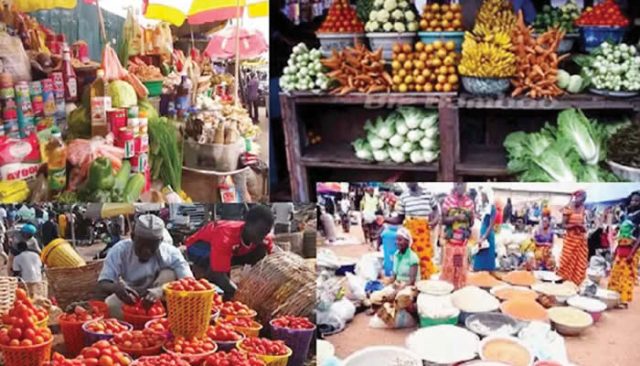
Nigeria’s agricultural import bill rose to ₦2.22 trillion in the first half of 2025, sparking outrage among farmers, millers, and stakeholders who say Federal Government policies are worsening food insecurity and crippling local production.
The backlash followed President Bola Tinubu’s recent directive to a Federal Executive Council committee to “further crash food prices” nationwide. The Minister of State for Agriculture and Food Security, Sabi Abdullahi, disclosed this in Abuja while addressing journalists at a workshop on parliamentary reporting.
According to Abdullahi, the move would ensure safe passage of food commodities across the country’s supply routes, cutting transport costs and easing prices.
But farmer groups say the approach is superficial.
“The cost of food will only drop if production costs go down. Transport is just one factor. Farmers are already struggling to buy fertiliser because prices are so low. The surge in imports has made things worse,”
— Kabir Ibrahim, National President, All Farmers Association of Nigeria (AFAN).
Rice millers push back
Rice processors are equally dissatisfied. Peter Dama, Chairman of the Competitive African Rice Forum, warned that government’s approach risks alienating investors.
“You don’t just issue an order to crash prices. That is not how markets work. Stakeholders should have been consulted, and subsidies provided. Otherwise, pronouncements without engagement will fail,” he said.
Dama cautioned that persistent importation and lack of subsidies were driving many farmers out of agriculture.
Unfulfilled promises on tractors
Stakeholders also criticised the government over delays in distributing 2,000 tractors launched in July 2024 to support mechanisation. More than a year later, none have reached farmers.
“We are running out of patience,” Ibrahim said. “We need machine power to support labour, yet no modalities have been released.”
A senior ministry official confirmed that the tractors’ distribution plan was still awaiting presidential approval, citing the involvement of multiple agencies including finance, customs, and trade.
Purchasing power crisis
Beyond imports and policy directives, weak consumer purchasing power remains a bigger problem, stakeholders argue.
“Even if prices fall, Nigerians don’t have the money to buy food,” Ibrahim stressed.
Import surge data
Figures from the National Bureau of Statistics (NBS) showed that agricultural imports stood at ₦1.04tn in Q1 2025, rising to ₦1.18tn in Q2. This represents a 32.6% increase year-on-year and a 14.3% rise from Q1.
The surge followed Tinubu’s 180-day duty-free window introduced in July 2024, which allowed licensed firms to import staples such as maize, rice, wheat, beans, and millet without paying tariffs. The policy, meant to tackle food inflation, expired in December 2024 but left behind a glut of imports and collapsing local prices.
AFAN’s Ibrahim said maize prices dropped from ₦60,000 per tonne to about ₦30,000, leaving farmers unable to recover costs.
“Farmers are not happy; many have abandoned their farms,” he said.
Women farmers hit hardest
Chinasa Asonye, National Secretary of the Small-Scale Women Farmers Organisation in Nigeria, said skyrocketing input costs and poor-quality subsidised products have worsened the crisis.
“Some subsidised fertilisers and herbicides distributed were expired and damaged crops. Without subsidies and better input distribution, farmers cannot survive,” she warned.
She also noted that hoarding had compounded the problem. “Grains bought at ₦140 per kg are now selling for ₦70. Some imported rice sold at ₦48,000 is infested with weevils and not even edible.”
The bigger picture
Experts say ad hoc policies — from duty-free import waivers to directives on price crashes — will not solve Nigeria’s food crisis.
Dama summed it up:
“Reducing transport costs helps, but without real investment in local production and proper stakeholder engagement, Nigeria will remain import-dependent and food-insecure.”
With ₦2.22tn already spent on food imports in just six months, and farmers abandoning their fields, analysts warn that Nigeria’s food security outlook remains fragile.
Post comments (0)