Listeners:
Top listeners:
-
 play_arrow
Listen Live City 105.1 FM #WERUNTHISCITY

Dangote Refinery saves Nigeria over ₦10bn annually in forex — Official
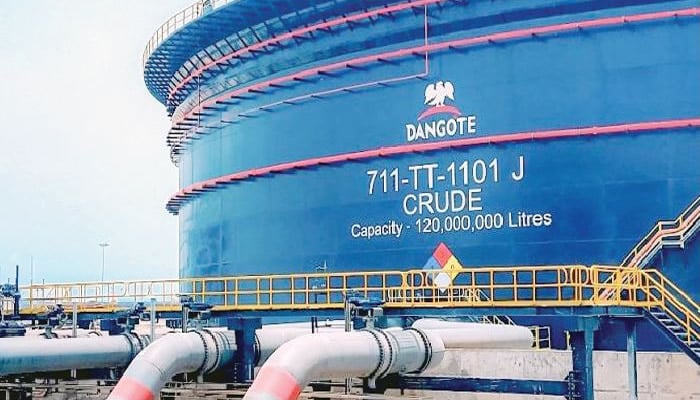
The Dangote Refinery is now saving Nigeria more than ₦10 billion every year in foreign exchange as locally refined products gradually replace fuel imports, an official of Dangote Industries has revealed.
Speaking in Lagos during the 2025 Media Week organised by the Nigeria Union of Journalists (Lagos Council), the company’s Senior General Manager for Corporate Communications, Sunday Esan, said the refinery has become a major economic relief for the country.
According to him, the refinery is not just a landmark project but a key driver of GDP growth, job creation, and a more stable energy supply. He noted that nearly two years after operations began, Nigeria’s dependence on imported petroleum products has dropped noticeably.
Esan explained that fuel importation reduced by 1.54% in Q1 2025, with Nigeria spending $1.2 billion during the period compared to $2.6 billion in the first quarter of 2024. He attributed this decline to the impact of the refinery’s output, which has eased pressure on the naira and strengthened the country’s foreign reserves.
He added that the refinery is already considering plans to expand production capacity from 650,000 barrels per day to 1.4 million barrels, amid growing international interest in its products — including jet fuel, which buyers from Saudi Aramco and the United States have reportedly shown interest in.
Esan also highlighted the size and scale of the investment, describing the refinery as covering an area “seven times the size of Victoria Island,” requiring about five hours to fully tour by car. Additionally, Dangote’s acquisition of 4,000 CNG trucks for product distribution has created more than 24,000 jobs.
He urged journalists to visit the facility for a clearer understanding of its operations and its importance to Nigeria’s energy future, stressing the need for factual and responsible reporting.
Speaking earlier, NUJ Lagos Chairman, Adeleye Ajayi, said the forum provided an important platform to examine Nigeria’s energy challenges and the government’s efforts to strengthen the sector. He encouraged continued collaboration between the media and stakeholders in the energy industry.
The Chairman of the Press Week Committee, Wale Akodu, also noted that the days of fuel scarcity and panic buying have significantly reduced, crediting improved local refining for easing the pressure on citizens.
Post comments (0)