Listeners:
Top listeners:
-
 play_arrow
Listen Live City 105.1 FM #WERUNTHISCITY

Under Buhari, Tinubu: 500 Generals Forced Out Despite Rising Insurgency
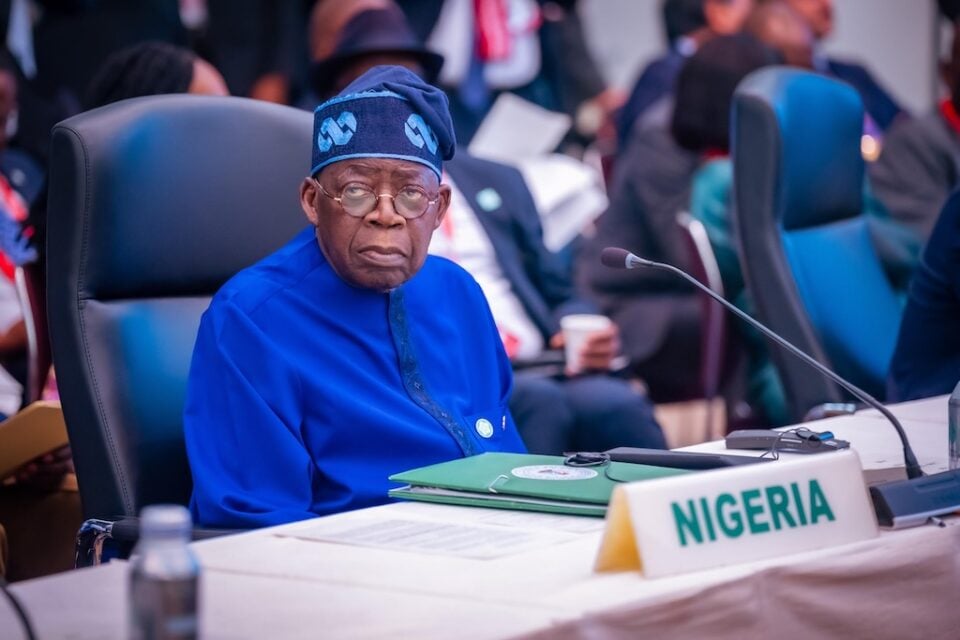
Despite escalating insecurity across the country, over 500 senior military officers — including Major Generals, Brigadier Generals, Rear Admirals, and Air Vice Marshals — have been forced into early retirement following the appointment of new service chiefs under former President Muhammadu Buhari and current President Bola Tinubu.
The retirements, which affected the Army, Navy, and Air Force, are tied to a long-standing military tradition that mandates officers senior to or of the same course as newly appointed service chiefs to exit the system. The aim, according to the military, is to preserve discipline, hierarchy, and efficiency.
However, insiders suggest that the total number of affected officers may exceed 900, though the military has not confirmed this.
Waves of Retirement Since 2015
The first major purge came in 2015, when Buhari appointed Lt.-Gen. Tukur Buratai, Air Marshal Sadique Abubakar, and Vice Admiral Ibok-Ete Ibas as service chiefs. Over 100 senior Army officers and 20 senior naval officers were retired.
In 2021, another shake-up saw Air Marshal Isiaka Amao, late Lt.-Gen. Ibrahim Attahiru, and Vice Admiral Awwal Gambo take charge, resulting in the exit of about 123 generals and over 100 officers from the Air Force and Navy.
After Attahiru’s death, Gen. Farouk Yahaya’s appointment — being junior to several generals — triggered more retirements.
Under President Tinubu, the pattern has continued. His June 2023 appointment of Lt.-Gen. Taoreed Lagbaja, Air Marshal Hasan Abubakar, and Vice Admiral Emmanuel Ogalla led to the retirement of 117 top officers across the three services.
Following the recent reshuffle, which saw Gen. Olufemi Oluyede replace Gen. Christopher Musa as Chief of Defence Staff, another 60 senior officers may be affected.
Retired Officers React
Retired Gen. Ishola Williams criticized the practice, calling it “a bad tradition copied from the military regime.” He said, “Replacing service chiefs shouldn’t mean mass retirements. It’s abnormal and wasteful.”
He recommended restructuring the chain of command to allow for a natural succession system and prevent abrupt dismissals.
Retired Gen. Aliyu Momoh supported Tinubu’s leadership shake-up but urged him to “go deeper” by dismantling entrenched cabals within the military.
“There are hidden hands and cartels within and outside the system. If Tinubu doesn’t address them, we’ll continue this same cycle for years,” he warned.
Structural Concerns
Retired Group Captain Sadique Shehu, a former NAF spokesman, described the mass retirements as “unsustainable”, citing poor manpower planning and political interference.
He revealed that by 2022, Nigeria had around 960 generals for a total force of 235,000 personnel, while the U.S., with over 1.3 million troops, has roughly the same number.
He urged the National Assembly to legislate a clear process for appointing and retaining service chiefs, to reduce political influence and ensure stability.
The Need for Balance
Some retired officers, including Maj.-Gen. Lasisi Abidoye and Maj.-Gen. PJO Bojie, argued that periodic retirements are necessary for career progression and efficiency, though they acknowledged the disruption it causes.
They emphasized that routine turnover helps prevent stagnation at the top and injects fresh perspectives into leadership.
However, they agreed that the government must find a way to retain the expertise of retired generals — perhaps through a reserve corps — while reforming the system to prevent mass exits whenever new leadership emerges.
Post comments (0)