Listeners:
Top listeners:
-
 play_arrow
Listen Live City 105.1 FM #WERUNTHISCITY

APC, Opposition Trade Blows Over Tinubu’s Revenue Target Claim
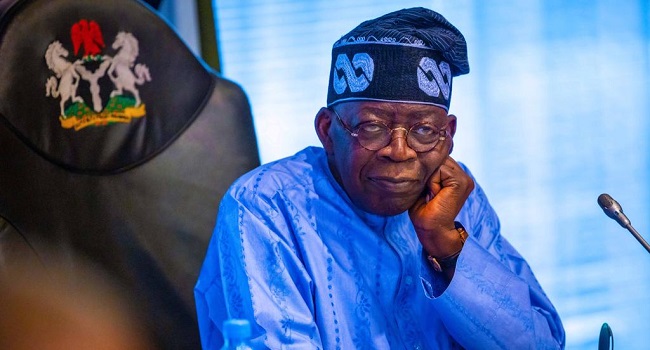
The All Progressives Congress (APC) and opposition parties clashed on Wednesday over President Bola Tinubu’s declaration that Nigeria had already achieved its 2025 revenue projection by August, largely driven by non-oil earnings.
While the ruling party celebrated the announcement as proof that Tinubu’s reforms were stabilising the economy, opposition groups—including the African Democratic Congress (ADC), Labour Party (LP), New Nigeria Peoples Party (NNPP), and the Coalition of United Political Parties (CUPP)—dismissed the claim as empty statistics that do not reflect the harsh realities facing Nigerians.
Economists also expressed doubts, questioning the President’s assertion that the Federal Government had stopped borrowing locally, despite ongoing debt market activity by the Debt Management Office (DMO) and the Central Bank of Nigeria (CBN).
Tinubu’s Claim
Speaking at the Presidential Villa while hosting former members of the defunct Congress for Progressive Change, Tinubu announced that Nigeria had surpassed its annual non-oil revenue target in August, months ahead of schedule.
According to presidential aide Bayo Onanuga, revenues for January–August stood at ₦20.59 trillion, up 40.5 percent from ₦14.6 trillion in the same period of 2024. Tinubu attributed this to improved tax collections and diversification away from oil dependence.
“The economy is now stabilised. Nobody is trading paper for foreign exchange anymore. The economy is predictable,” Tinubu said, adding that government no longer needed to borrow locally to finance its budget.
APC’s Defence
The APC leadership backed the President. Deputy National Organising Secretary, Nze Chidi Duru, argued that the revenue performance would ease borrowing pressure and enable government to deliver infrastructure projects.
“This shows the 2025 budget can be fully implemented without resorting to excessive borrowing. It will trickle down into stability across the economy,” Duru told The PUNCH.
Special Adviser on Policy Communication, Daniel Bwala, challenged critics to provide contrary figures. “The problem the opposition has is comprehension. If they doubt the President, let them show their own numbers,” he said.
Opposition Pushback
The ADC dismissed Tinubu’s declaration as “absurd.” National Publicity Secretary Bolaji Abdullahi argued that revenue growth without improvement in living standards was meaningless. “What is the purpose of meeting a target if Nigerians remain below the poverty line?” he asked.
The NNPP described the administration as “tax-and-spend,” accusing it of prioritising revenue over citizens’ welfare. “Meeting targets is not governance. People are still suffering, inflation is high, and the naira is at ₦1,600,” said the party’s spokesman, Ladipo Johnson.
The CUPP also criticised the claim, with National Secretary Peter Ameh accusing Tinubu of being “disconnected from reality.” He argued that revenues were being wasted on luxury spending instead of investments in health, agriculture, or SMEs.
A faction of the Labour Party went further, branding the statement a “lie,” and questioned why Nigeria continues to borrow abroad if targets had truly been met.
Economists Seek Clarity
Experts were split. Former Zenith Bank chief economist, Marcel Okeke, called Tinubu’s claim “unrealistic,” pointing to Nigeria’s continued borrowing negotiations.
Prof. Akpan Ekpo, former CBN director, noted that while hitting revenue projections would be positive, debt operations by the CBN and DMO suggest otherwise. “I don’t know what he means by not borrowing,” he said.
Prof. Segun Ajibola of Babcock University stressed that government data as of June showed revenue far below target, urging the Finance Ministry to clarify.
Other analysts suggested Tinubu may have meant that the ₦13 trillion projected deficit would not worsen, rather than that borrowing had stopped entirely.
Meanwhile, Dr. Richard Mayungbe of Copperstone University praised the diversification push, arguing that non-oil revenues and foreign exchange reforms were gradually strengthening the economy.
The Bigger Picture
Despite increased monthly allocations to states, poverty, food inflation, and insecurity remain widespread, and many Nigerians say they feel little relief from the government’s reported fiscal gains.
With economists divided and opposition leaders unconvinced, Tinubu’s claim has spotlighted the gap between headline statistics and citizens’ lived experiences—an issue likely to remain at the centre of Nigeria’s economic debates ahead of 2027.
Post comments (0)