Listeners:
Top listeners:
-
 play_arrow
Listen Live City 105.1 FM #WERUNTHISCITY
States Struggle With Capital Projects as Spending Falls Short
Procurement delays, insecurity, and rising costs have hindered state governments across Nigeria from meeting their capital expenditure targets in the first half of 2025.
Budget performance reports for the second quarter show that despite ambitious allocations meant to drive infrastructure growth, actual spending fell far below expectations.
Between January and June, 31 states spent a combined ₦2.75 trillion on capital projects, representing only 15.7 per cent of the ₦17.51 trillion allocated for the year. The shortfall has slowed work on key infrastructure such as roads, schools, hospitals, and water systems, deepening the hardship faced by citizens.
This underperformance mirrors 2024, when states budgeted ₦11.34 trillion for capital projects but fell short by nearly ₦4 trillion due to revenue shortfalls, rising wage bills, and mounting debt servicing.
Revenue Gains, Rising Expectations
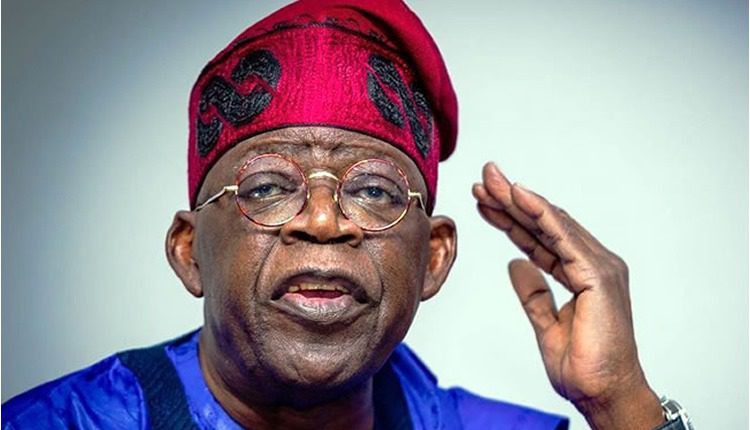
With the removal of fuel subsidy and exchange rate reforms boosting revenues for federal, state, and local governments, public expectations for visible development outcomes have increased. Last month, President Bola Tinubu urged governors to channel more resources into rural electrification, agricultural mechanisation, and poverty eradication.
Despite these calls, many states have struggled to balance capital spending with recurrent obligations, including salaries and overheads. Collectively, the 31 states spent ₦2.35 trillion on recurrent expenditure in the same six-month period—almost on par with capital disbursements.
Contrasting State Performances
The reports reveal wide disparities in spending priorities.
-
Imo State led in infrastructure investment, committing ₦188.1bn to capital projects against ₦50.29bn for recurrent.
-
Enugu, Bayelsa, Kebbi, Abia, Edo, and Akwa Ibom also devoted more funds to capital, with Enugu recording the highest capital-to-recurrent ratio of 81.9%.
-
Conversely, Kogi, Ekiti, Osun, and Oyo allocated more to recurrent expenditure, raising concerns over long-term development priorities.
Some states maintained near balance, such as Kaduna (₦108.45bn capital vs ₦100.31bn recurrent) and Ogun (₦155.64bn capital vs ₦157.15bn recurrent).
Insecurity and Bureaucracy Slow Progress
Several states blamed insecurity for stalling projects. In Benue, where capital spending was less than half of recurrent, attacks on rural communities made it difficult for contractors to mobilise. Imo and Borno cited insurgency and weak capital inflows, while Ebonyi and Zamfara said procurement bottlenecks delayed implementation.
Others, including Jigawa, Sokoto, Yobe, and Nasarawa, pointed to bureaucratic hurdles, tendering delays, and inflation as factors limiting project execution.
Analysts Warn of Long-Term Impact
Experts warn that consistent underperformance in capital expenditure could undermine infrastructure delivery and economic growth at the subnational level. Prof. Segun Ajibola of Babcock University noted that high governance costs and weak accountability continue to erode the developmental impact of state budgets.
Meanwhile, states’ recurrent spending rose to ₦2.36 trillion in H1 2025, higher than the ₦1.99 trillion they collectively spent on refreshments, travel, utilities, and allowances over the first nine months of 2024.
Top recurrent spenders in the first half of 2025 include Ogun (₦157.15bn), Kogi (₦133.22bn), Oyo (₦129.06bn), Kano (₦115.24bn), and Akwa Ibom (₦113.44bn), while Enugu (₦22.06bn), Katsina (₦26.39bn), and Zamfara (₦37.57bn) spent the least.
Post comments (0)