Listeners:
Top listeners:
-
 play_arrow
Listen Live City 105.1 FM #WERUNTHISCITY

Tinubu Orders Review of Revenue Deductions by Key Government Agencies
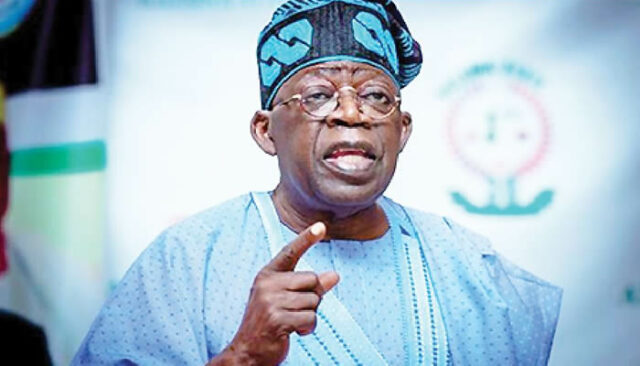
President Bola Tinubu has instructed a comprehensive review of deductions and revenue retention policies among Nigeria’s top revenue-generating bodies, aiming to increase national savings, enhance spending efficiency, and free up more funds to drive economic growth.
The directive, issued during Wednesday’s Federal Executive Council (FEC) meeting in Abuja, targets agencies such as the Federal Inland Revenue Service (FIRS), Nigeria Customs Service, Nigerian Upstream Petroleum Regulatory Commission (NUPRC), Nigerian Maritime Administration and Safety Agency (NIMASA), and the Nigerian National Petroleum Company Limited (NNPC Ltd).
According to the Minister of Finance and Coordinating Minister of the Economy, Wale Edun, President Tinubu specifically ordered a reassessment of NNPC’s 30% management fee and 30% frontier exploration deduction provided under the Petroleum Industry Act. The Economic Management Team, chaired by Edun, is expected to submit concrete recommendations to FEC on the best path forward.
Tinubu said the move aligns with his ongoing economic reforms, which he claimed have removed long-standing distortions, restored policy credibility, and improved investor confidence. He noted that these changes have created a more transparent and competitive environment across sectors such as infrastructure, oil and gas, healthcare, and manufacturing.
Reaffirming his Renewed Hope Agenda, the President restated Nigeria’s ambition to build a $1 trillion economy by 2030. To meet this goal, he stressed the need for annual GDP growth of at least 7% from 2027, describing the target as both an economic necessity and a moral obligation to lift millions out of poverty.
Citing the International Monetary Fund’s July 2025 Article IV report, Tinubu said the global lender backed Nigeria’s economic direction and highlighted the need for investment-led growth.
The President also drew attention to the Renewed Hope Ward Development Programme, a nationwide initiative covering all 8,809 wards in the country, designed to empower grassroots entrepreneurs and tackle poverty at the community level in partnership with state and local governments as well as the private sector.
Tinubu warned that low public savings remain a barrier to higher investment, with government investment currently at just 5% of GDP. He emphasised that “every available naira” must be optimised, especially given current global liquidity pressures.
Edun added that Nigeria’s macroeconomic indicators are gradually improving — pointing to a steadier exchange rate, moderating inflation, rising revenues, and a debt-to-GDP ratio within manageable limits. He described savings as the foundation of investment, saying the review of deductions is intended to quickly boost public sector reserves.
The Finance Minister also presented two proposals to FEC: a $125 million Islamic Development Bank loan for infrastructure upgrades in Abia State — including 35 kilometres of roads in Umuahia and 126 kilometres in Aba — and a plan to refinance ₦4 trillion in outstanding electricity sector debts. The debt resolution process will roll out in phases, with the first phase expected within a month under the Debt Management Office’s coordination.
Post comments (0)