Listeners:
Top listeners:
-
 play_arrow
Listen Live City 105.1 FM #WERUNTHISCITY

Food Crisis: NSA, Governors Unite to Curb Inflation and Streamline Food Distribution
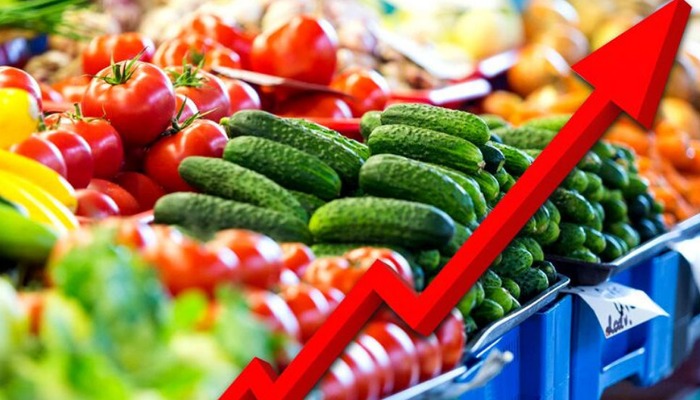
In a significant move to tackle rising food prices, Nigeria’s 36 state governors have agreed to a coordinated effort with the Federal Government to remove barriers hampering the smooth movement of food across the country. This includes harmonizing state-level levies, eliminating illegal checkpoints, and supporting a unified security framework.
The collaboration follows a high-level meeting with National Security Adviser Nuhu Ribadu, several federal ministers, and governors under both the Nigeria Governors’ Forum (NGF) and the Progressive Governors’ Forum (PGF). The stakeholders identified poor infrastructure, multiple taxation, and insecurity as key drivers of food price inflation.
Despite a reported drop in the national year-on-year food inflation rate to **21.14% in May**, this decrease is largely due to statistical recalibration. On a month-by-month basis, food prices continue to rise—reaching **2.19%** in May from **2.06%** in April. Many major food-producing states are also experiencing sharp price hikes, revealing a disconnect between local supply and affordability.
According to Governor Babajide Sanwo-Olu of Lagos, who delivered the NGF communiqué, the forum acknowledged the urgent need to dismantle illegal toll points and checkpoints that disrupt the food supply chain. The presentation highlighted that governors had collectively invested over \$2.2 billion in state-level interventions under the Nigeria Community Action Recovery and Economic Stimulus (NG-CARES) programme.
However, the governors expressed disappointment over the World Bank’s failure to fulfill its financial obligations under NG-CARES 1.0, which they said has impacted project delivery. They called for a resolution to ensure a smooth transition to **NG-CARES 2.0**, a phase aimed at long-term resilience for households and small businesses.
On the issue of security, Governor Hope Uzodimma of Imo State reiterated the PGF’s commitment to enhancing grassroots protection. He emphasized the necessity of adopting a state-based security structure to complement federal efforts.
“Following the president’s recent visit to Benue State, the Progressive Governors’ Forum and the NGF have collectively resolved to support a decentralized security approach that empowers states and communities,” Uzodimma shared via his verified social media account.
He noted that Imo has already implemented this model, yielding tangible results through enhanced intelligence gathering and community collaboration.
This joint security and economic strategy comes in the wake of a devastating attack in Yelewata, Benue State, where over 200 residents were reportedly killed. The incident has intensified public concern over national security and food supply disruptions.
President **Bola Tinubu**, who recently visited Benue to meet with survivors and affected communities, has pledged justice and ordered security agencies to apprehend the perpetrators.
In conclusion, the joint effort by the NSA, state governors, and relevant federal ministries marks a renewed push to stabilize Nigeria’s food economy and secure vulnerable communities, as the country battles inflation and insecurity on multiple fronts.
Post comments (0)