Listeners:
Top listeners:
-
 play_arrow
Listen Live City 105.1 FM #WERUNTHISCITY

REVEALED: Nigeria’s Biggest Music Earners in 2025
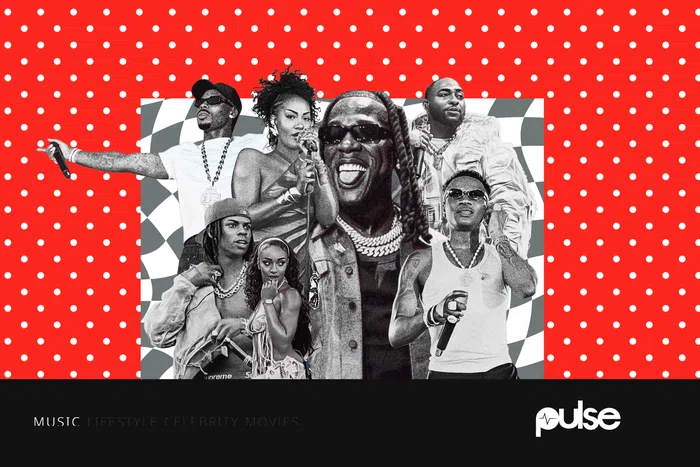
The Nigerian music industry crossed a major financial milestone in 2025, firmly shedding the “next big thing” label and stepping into full global business status. Afrobeats is no longer just a sound — it is an ecosystem powered by global touring, luxury brand partnerships, and strategic ownership of music rights.
According to industry estimates compiled from live shows, streaming performance, endorsements, and licensing deals, Nigeria’s top 10 musicians collectively generated about $73 million in gross earnings within the year. These figures represent income before deductions such as taxes, management fees, and production costs.
At the centre of this financial boom are the genre’s dominant forces Burna Boy, Wizkid, and Davido whose influence continues to set the benchmark for African artists worldwide.
Burna Boy Tops the List
Burna Boy emerged as the highest earner of 2025, driven largely by an aggressive global touring schedule. His ability to headline stadium-sized venues across Europe and North America placed him in a class of his own, with several shows reportedly generating multi-million-dollar guarantees.
Beyond touring, his massive international streaming numbers and high-value endorsement deals including a landmark partnership with Swiss sportswear brand On reinforced his position at the summit. Burna Boy’s expansion into film production further highlighted his shift from musician to diversified global brand.
Wizkid and Davido Follow Closely
Wizkid proved that fewer shows can still mean massive returns. While his tour dates were limited, premium international festival bookings and unmatched dominance in the Nigerian streaming market kept his earnings near the top. His album Morayo and hit single Kese (Dance) ruled local charts, while his global catalogue continued to perform strongly in high-value markets.
Davido, on the other hand, leaned into his strength as Afrobeats’ most marketable figure. Though he toured internationally, his most profitable performances came from select high-end shows in Nigeria. Endorsements remained his biggest asset, with multimillion-dollar partnerships across fashion, beverages, betting, and tech brands driving a significant portion of his income.
The New Power Players
Artists like Rema, Asake, and Tems represented a new generation redefining success. Rema maximised the global festival circuit, commanding premium fees with fewer appearances. Asake’s transition into full independence complete with ownership of his masters marked one of the most important business moves of the year, proving that artist control can outperform traditional label structures.
Tems maintained her position as Nigeria’s most successful female export, balancing selective performances with high-profile global moments and luxury brand partnerships. Her historic investment in a US football club signalled a shift from earnings to long-term wealth building.
Streaming Kings and Independent Hustlers
Further down the list, Ayra Starr, Omah Lay, BNXN, and Seyi Vibez demonstrated that consistent streaming performance and smart deal structures can rival heavy touring. Seyi Vibez stood out for generating a large share of his income purely from music ownership, while BNXN benefited from high-volume international bookings combined with favourable royalty splits.
Beyond the Top 10
Several artists narrowly missed the main ranking but remained financial heavyweights. Acts like Flavour, Tiwa Savage, Kizz Daniel, Ruger, and CKay continued to earn millions through private bookings, domestic dominance, catalog longevity, and strategic distribution deals — showing that success in Nigerian music now comes in many forms.
The Bigger Picture
What 2025 ultimately revealed is a structural shift in Nigerian music. Touring scale, global consumption, and ownership of intellectual property now matter more than hype. Afrobeats stars are no longer chasing validation — they are building corporations, negotiating equity, and competing on the world’s biggest stages.
Nigeria’s music industry has arrived, and the numbers prove it.
Post comments (0)