Listeners:
Top listeners:
-
 play_arrow
Listen Live City 105.1 FM #WERUNTHISCITY

Countdown to 2027: Tinubu to Appoint New INEC Chairman This Week
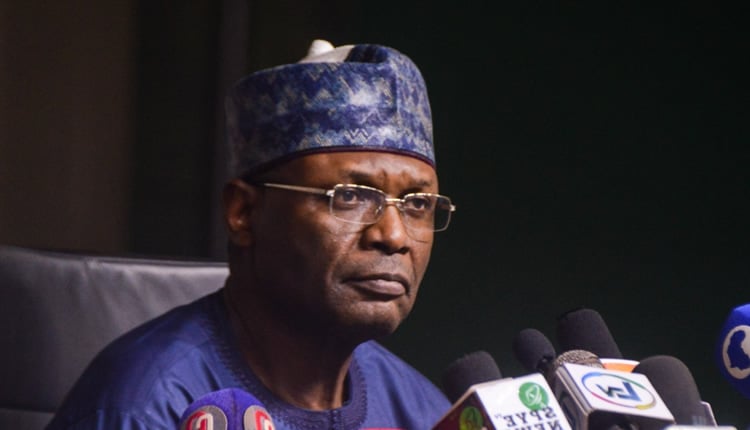
President Bola Tinubu is expected to announce a new Chairman of the Independent National Electoral Commission (INEC) this week, following the formal exit of Professor Mahmood Yakubu, whose second and final term has come to an end.
Yakubu, who served as Nigeria’s 14th INEC chairman since 2015, officially handed over to May Agbamuche-Mbu, the commission’s most senior National Commissioner, who will act as interim chairperson pending a substantive appointment.
The President is scheduled to present a list of nominees for the position at the Council of State meeting in Abuja on Thursday, after which consultations with former Presidents, state governors, and other council members will guide his final decision.
Tinubu Honours Yakubu
In a statement on Tuesday, Presidential Adviser on Information and Strategy, Bayo Onanuga, said the President had accepted Yakubu’s retirement and conferred on him the national honour of Commander of the Order of the Niger (CON) in recognition of his decade-long service to the nation.
“President Tinubu thanked Professor Yakubu for his services to the nation and his efforts to sustain Nigeria’s democracy through the organisation of free and fair elections throughout his two-term tenure,” the statement read.
Yakubu was first appointed by former President Muhammadu Buhari in November 2015 and reappointed for another term in 2020 — the first INEC chair to serve two full tenures.
Yakubu Bows Out After 10 Years
At a handover ceremony in Abuja, Yakubu said he was stepping down in line with Section 306 (1 & 2) of the 1999 Constitution (as amended).
“I am handing over to one of the most senior national commissioners, May Agbamuche-Mbu, to act pending the appointment of a substantive chairman,” he said.
Yakubu highlighted INEC’s progress under his leadership, including the introduction of the Bimodal Voter Accreditation System (BVAS), the IReV results portal, and the expansion of polling units nationwide.
He also unveiled two publications documenting his decade in office — “Election Management in Nigeria 2015–2025” and “Innovations in Electoral Technology 2015–2025.”
Despite notable achievements, Yakubu’s tenure was marred by controversy during the 2023 general elections, which were plagued by technical glitches, late material delivery, and transmission challenges that drew criticism from political actors and civil society groups.
Debate Over Appointment Process
As Nigeria prepares for the 2027 general elections, debate continues over who should appoint the next INEC chairman.
Ifedayo Adedipe (SAN) dismissed the controversy as a distraction, arguing that institutional conduct, not the appointer, determines electoral integrity.
“Was it not Jonathan who appointed Professor Jega? Didn’t he lose the election? We should focus on citizens’ behaviour and electoral conduct, not who appoints who,” Adedipe said.
Similarly, Adedayo Adedeji (SAN) and Wale Balogun (SAN) agreed that while the President has constitutional powers to appoint, the process must be transparent and merit-based, with Senate confirmation serving as an essential check.
“The system is sufficient to produce a credible person, but weak enough that a wrong appointment can slip through,” Balogun warned.
Profile: May Agbamuche-Mbu
Agbamuche-Mbu, a Delta State-born legal practitioner, was appointed INEC National Commissioner in 2016.
She holds law degrees from Obafemi Awolowo University and Queen Mary University of London, and is a member of the Chartered Institute of Arbitrators (UK).
Before joining INEC, she served as Editor of ThisDay Lawyer and Managing Partner of Norfolk Partners, a Lagos-based law firm.
Reps Resume, Focus on Electoral and Security Reforms
Meanwhile, Speaker of the House of Representatives, Tajudeen Abbas, said the parliament will prioritise constitutional amendments and electoral reforms ahead of the 2027 polls.
In his welcome address on resumption from recess, Abbas said the Electoral Act Amendment Bill aims to strengthen measures against violence, improve accessibility for persons with disabilities, and clarify election timelines.
“Our goal is to make elections less contentious, lower costs, and ensure fairer party primaries,” he said.
Abbas also reaffirmed the House’s commitment to security and economic reforms, including community policing, renewable energy legislation, and gender inclusion through the Reserved Seats Bill.
“We must move from theory to decisive legislative action,” he added. “The Nigerian people expect deliberate steps that improve their daily lives.”
INEC Begins 2027 Preparations
Before his exit, Yakubu confirmed that INEC had already started preparations for upcoming elections, including the Anambra governorship (November 2025), FCT council polls (February 2026), and Ekiti and Osun governorship elections (mid-2026) — all leading up to the 2027 general elections.
“Beyond reviews, the commission must further clean up the voters’ register, review polling unit locations, and improve party primary management,” he said.
Yakubu concluded by thanking Nigerians for their criticisms and encouragement throughout his decade-long service, praying for “continued blessings on our democracy.”
Post comments (0)