Listeners:
Top listeners:
-
 play_arrow
Listen Live City 105.1 FM #WERUNTHISCITY
Tinubu’s Electricity Reform Sparks State-DisCo Clashes, Senate Opposition
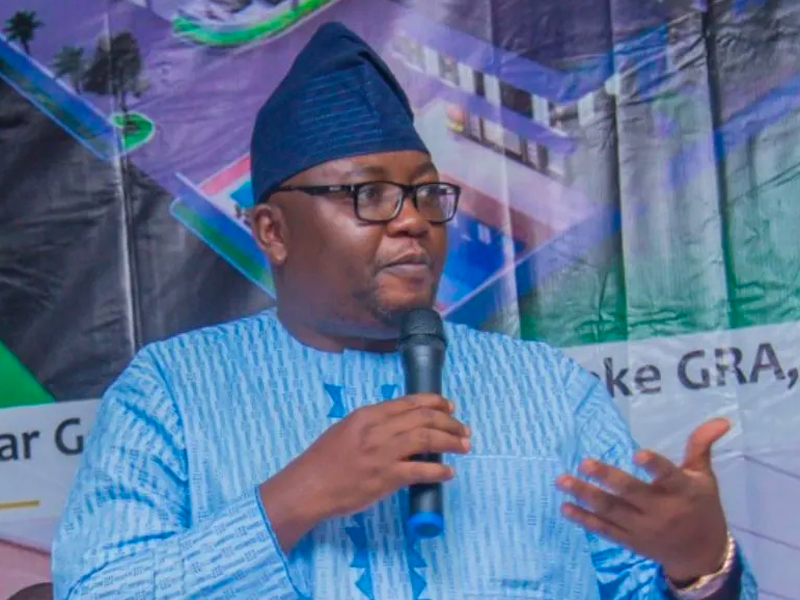
Two years after President Bola Tinubu signed the landmark Electricity Act into law, the ambitious reform is facing intense scrutiny and backlash. Designed to decentralise the power sector by shifting control from the federal to state governments, the law has triggered widespread controversy and a fresh wave of crises between state electricity regulators, distribution companies (DisCos), and federal authorities.
The Act, passed in 2023, removed electricity from the exclusive legislative list, empowering states to generate, transmit, distribute, and regulate electricity within their territories. Hailed as a transformative step toward fixing Nigeria’s power challenges, the Act gave states the authority to issue licences and oversee the electricity market within their borders. The Nigerian Electricity Regulatory Commission (NERC) had promptly started implementing the law by issuing various directives to encourage sectoral reforms and attract private investment.
However, growing tensions are putting the law’s long-term viability in question. As more states move to assert control over their power markets, disputes have emerged over tariffs, regulatory authority, and constitutional interpretation.
Early State Adoption, Rising Tensions
According to NERC, regulatory authority over intra-state electricity markets has already been transferred to Edo, Ekiti, Enugu, Imo, Kogi, Lagos, Niger, Ogun, Ondo, and Oyo. Plateau is next in line for full transition by September 12, while Abia and Delta have also signaled readiness. Each of these states has set up its own electricity commission, in line with Section 230 of the Act.
Yet the decentralisation effort recently hit a stumbling block in Enugu State. The newly formed Enugu Electricity Regulatory Commission (EERC) slashed the Band A electricity tariff from ₦209 to ₦160 per kilowatt-hour, citing federal subsidies and local cost realities. This decision, effective from August 1, 2025, was targeted at MainPower Electricity Distribution Limited—the utility that replaced Enugu Electricity Distribution Company following the handover from NERC.
Tariff Dispute Erupts
EERC Chairman Chijioke Okonkwo defended the move, noting that a cost-reflective tariff of ₦94 was determined using the commission’s 2024 Tariff Methodology Regulations. He explained that the federal government subsidizes up to ₦45 of the actual ₦112/kWh generation cost, allowing the state regulator to set a lower average for Band A consumers.
However, power generation firms were quick to condemn the decision. The Association of Power Generation Companies (APGC) warned that Enugu’s pricing strategy could destabilise an already indebted sector, as it relies on an assumed federal subsidy with no official budget backing.
APGC CEO, Joy Ogaji, criticised the EERC for setting a precedent that ignores the financial realities of the power industry. She pointed out that the generation companies are already owed over ₦4 trillion, including ₦1.2 trillion accrued in the first half of 2025 alone.
Similarly, the Association of Nigerian Electricity Distributors (ANED) and the Minister of Power, Adebayo Adelabu, stressed that if states want lower tariffs, they must be prepared to bear the financial shortfall. NERC also reiterated that states do not have regulatory authority over power generation and transmission, which remain under federal jurisdiction.
Still, Enugu authorities stood their ground. Joe Aneke, Special Adviser on Power to the Enugu Governor, said the EERC only adjusted distribution costs, not generation or transmission. Meanwhile, states like Lagos, Ondo, and Plateau are also considering tariff cuts, indicating that Enugu’s approach may not be isolated.
Senate Pushback and Amendment Controversy
As tariff tensions grow, the Electricity Act faces fresh threats from the National Assembly. A new amendment bill currently under Senate review has drawn fierce criticism from state governments and energy regulators.
The Forum of Commissioners of Power and Energy in Nigeria described the proposed amendments as premature and undermining. They accused the Senate of attempting to reverse constitutional gains achieved through the 2023 Act, which was itself a product of the Fifth Amendment to the 1999 Constitution.
The commissioners said more than 16 states have already passed their own electricity laws and were not consulted before the new amendment was introduced. They warned that the bill could create a constitutional crisis and reignite conflict between federal and state regulators.
The forum argued that the bill aims to re-centralise electricity regulation and reintroduce subsidy structures without clear fiscal support, thus sabotaging the intent of the 2023 reforms.
They warned, “The amendment could nullify states’ efforts, entrench subsidy dependence, and drag the power sector further into debt and confusion.”
Labour Joins the Resistance
In a parallel controversy, organised labour has raised alarm over provisions in the amendment bill that would restrict union action in the power sector. The bill proposes barring strikes and picketing unless there’s a formally negotiated Minimum Service Agreement in place.
The Nigeria Labour Congress (NLC), Trade Union Congress (TUC), and the National Union of Electricity Employees (NUEE) have all voiced strong opposition, calling it a move to suppress workers’ rights under the guise of reform.
DisCos vs States
Meanwhile, some officials suggest that the recent legislative push is being influenced by private interests. Lagos State Commissioner for Energy and Mineral Resources, Biodun Ogunleye, alleged that the amendment bill was sponsored by DisCos seeking to resist state authority.
“You know we are in conflict with our DisCos. They are not aligned with what we are trying to do. This bill in the Senate is being driven by their agenda,” Ogunleye claimed.
Post comments (0)