Listeners:
Top listeners:
-
 play_arrow
Listen Live City 105.1 FM #WERUNTHISCITY
Tinubu, National Assembly Face Criticism Over Prolonged 2024 Budget Execution
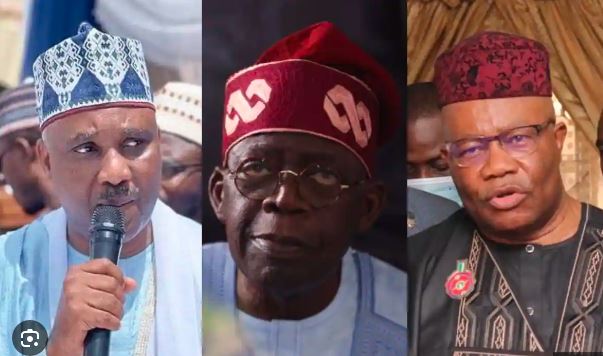
President Bola Tinubu and the National Assembly are facing renewed backlash after the Senate and House of Representatives extended the implementation of the capital portion of the 2024 budget to December 31, 2025—a second extension in just months.
Experts in finance, economics, and the organized private sector have voiced concerns, labeling the move a reflection of the poor capacity of federal Ministries, Departments, and Agencies (MDAs) to execute projects efficiently. Critics also worry that the repeated delays erode fiscal discipline and make budget monitoring more difficult.
During a plenary session on Tuesday, the Senate swiftly passed an amended Appropriation Act to reflect the new deadline. Deputy Senate President Barau Jibrin announced the decision after it passed all legislative readings in one sitting. Senator Olamilekan Adeola, chair of the Senate Appropriations Committee, justified the extension, saying it would help ensure completion of ongoing capital projects.
Similarly, the House of Representatives advanced the bill through its second reading, with Deputy Majority Leader Ibrahim Halims presenting the proposed amendment. Speaker Tajudeen Abbas explained that capital spending had barely progressed, necessitating the extension.
The capital component had originally been extended from December 2024 to June 2025 upon President Tinubu’s request, which lawmakers had initially approved. However, with June approaching and many capital projects still incomplete, another extension was sought—resulting in Nigeria now running both the 2024 and 2025 budgets concurrently.
A federal ministry source revealed that despite 2025 being halfway through, the budget for the current year has not taken effect, with all expenditures still being carried out under the 2024 framework. The source disclosed delayed contractor payments and unpaid staff allowances as direct effects of the lag.
Meanwhile, the Accountant General’s office confirmed that capital funds under the 2024 budget were only recently released to ministries and noted that the 2025 budget would not begin until the 2024 version is officially closed.
Economist Ayo Teriba criticized the repeated extensions as a bad precedent and evidence of funding gaps. He noted that a 12-month budget period should not require 24 months for execution unless funds are insufficient.
Paul Alaje, an economist at SPM Professionals, warned that this practice could increase money supply and inflation, especially if capital projects from two different budget cycles run simultaneously. He emphasized the need for strict budget cycles to enable predictable economic planning.
Professor Akpan Ekpo described the overlapping budgets as “an embarrassment,” saying it reflects poor forecasting and disrupts growth, development, and employment efforts. He also flagged inflation risks, stressing the danger of pumping more funds into an already strained economy.
Dr. Muda Yusuf, of the Centre for the Promotion of Private Enterprise, pointed out that Nigeria’s capital budget performance has historically been poor. He linked the poor revenue outlook—particularly underwhelming oil earnings and failure to meet crude production targets—to the 2024 shortfall.
Yusuf concluded that unless the underlying assumptions of revenue generation are realistic, Nigeria’s budgets will continue to suffer from implementation delays.
Post comments (0)